Sahara Ghar
A permanent address for a shelter in Kailali whose whole public record lived on a Facebook page.
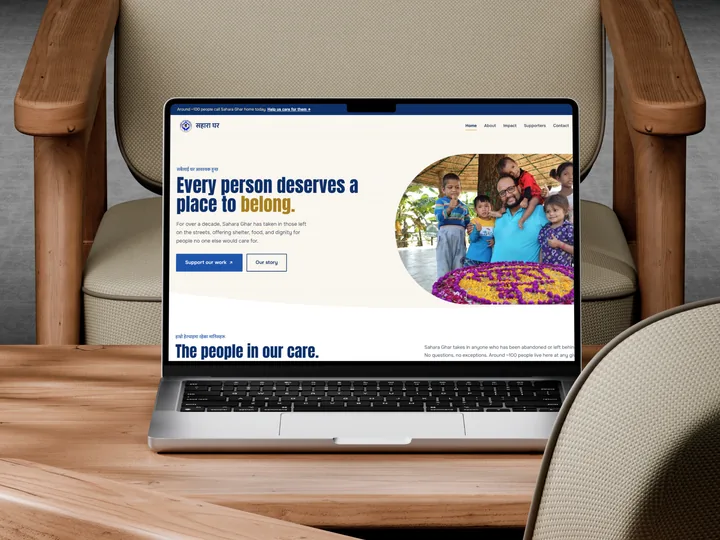
- Sahara Ghar | Helping Hands Nepal
- 2026
- Design, and part of the build
- Research, UX/UI Design, Development
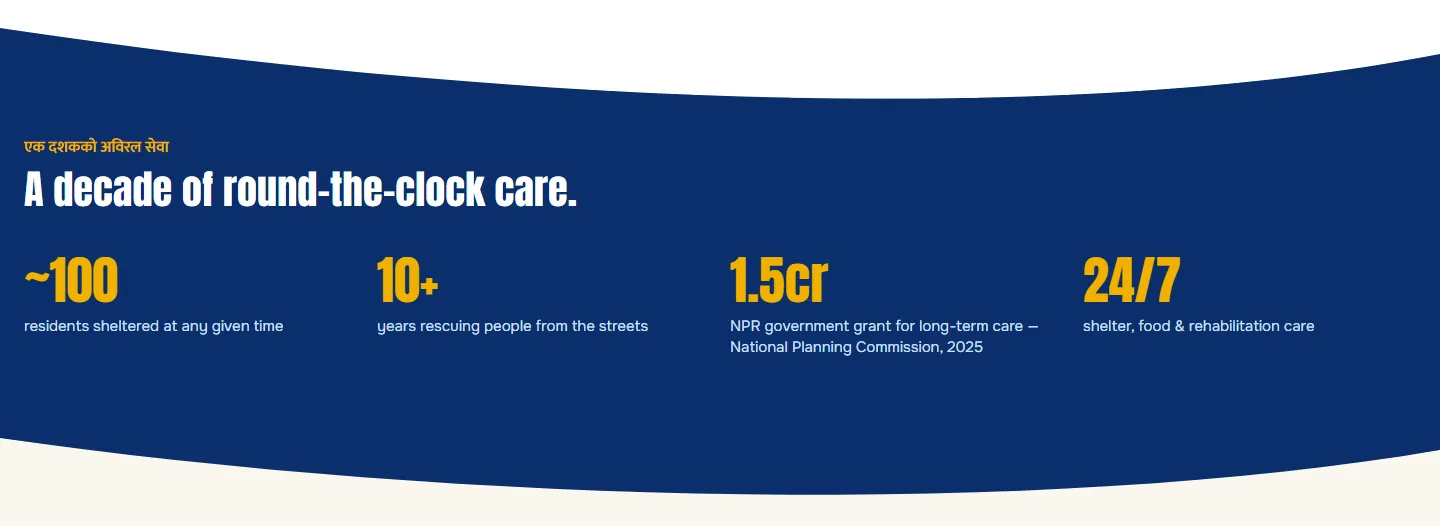
Sahara Ghar shelters around a hundred forgotten people in Kailali, Nepal, and for ten years its only record was a Facebook page. At Aurora Studios I worked on the design of the new site and built parts of it. Now it has a permanent address, in two languages.
What it is
A shelter in Kailali, run by Helping Hands Nepal, for people nobody else will take in: the destitute, the mentally ill with no family, abandoned children, elders, people with severe disabilities. Around a hundred live there at any time.
Made at Aurora Studios as a community initiative. I worked on the design and built parts of it.
Ten years on a Facebook feed
Everything the home had done lived on its Facebook page. A donor abroad or a district officer checking whether it was real had nothing to read but a feed. You cannot send a district officer to a feed.
Four constraints set the design
- Two languages: Nepali and English, neither one a fallback
- Android, outdoors: a mid-range phone in daylight on a patchy connection
- No web staff: what changes weekly, the home posts itself
- Nobody links to it: structured data has to vouch for it instead
Don’t compete with the feed. Embed it.
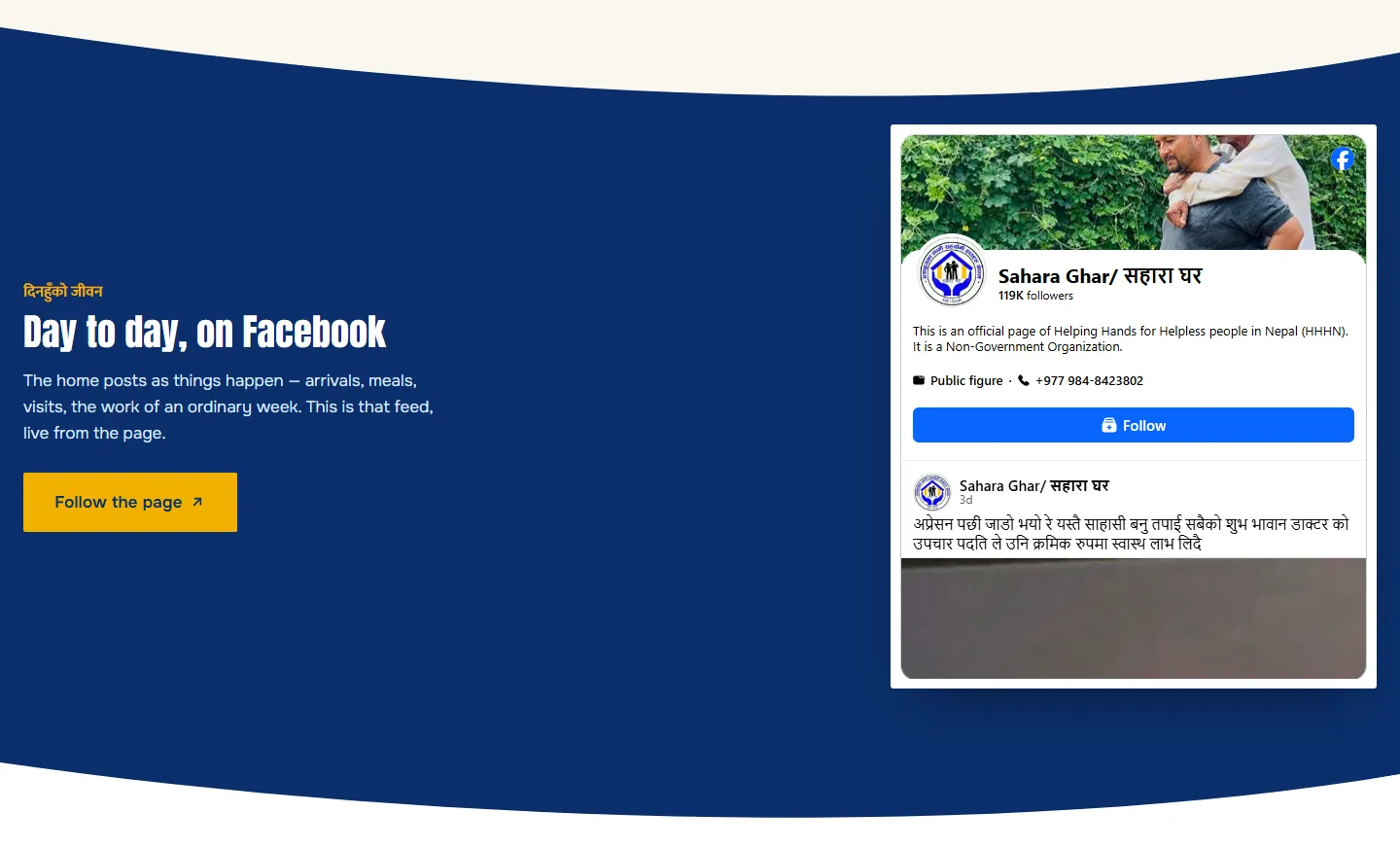
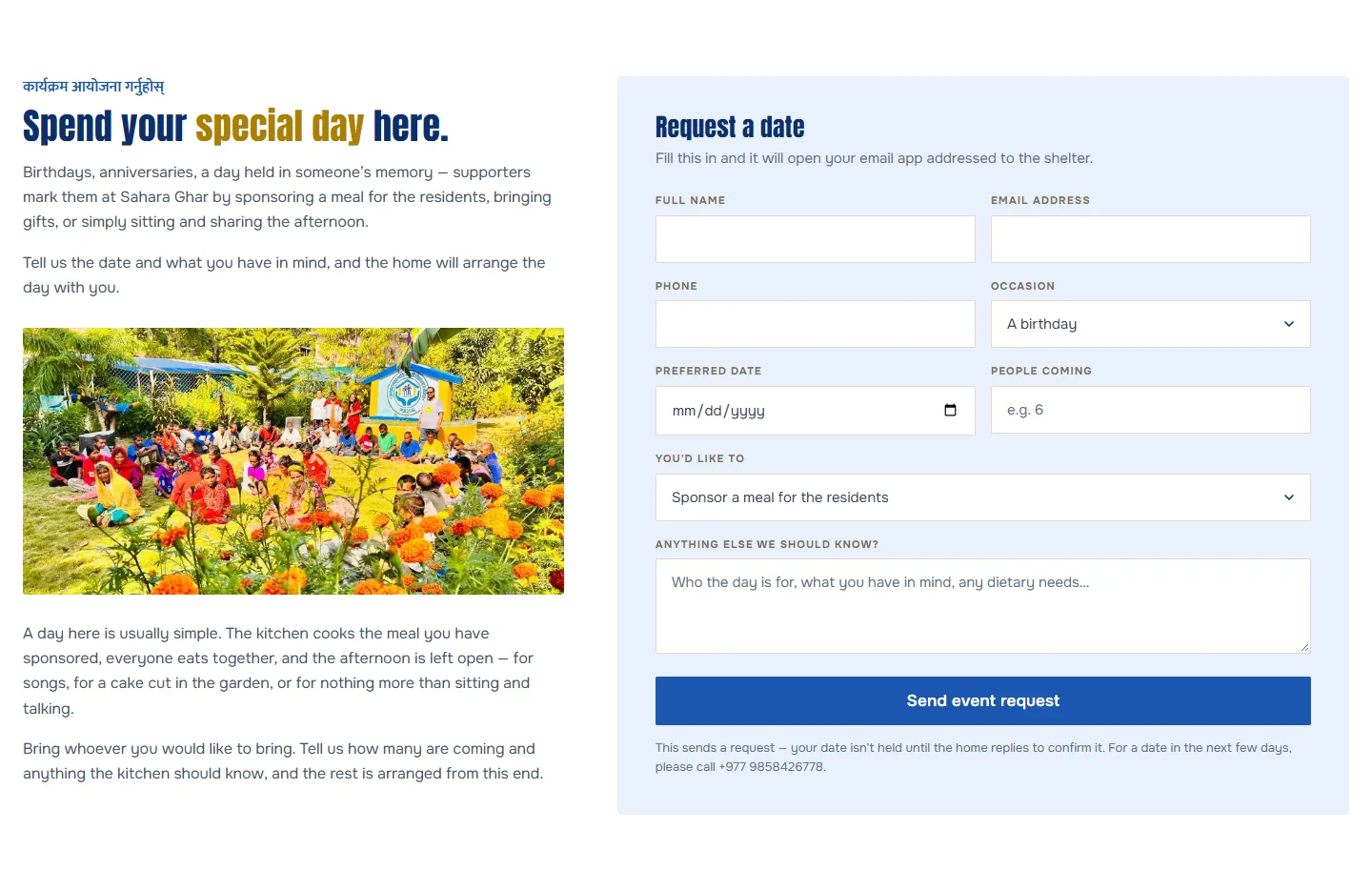
The site became the permanent record: who the home is, what it has done, who backs it. Daily life stays on Facebook, embedded live on the home page.
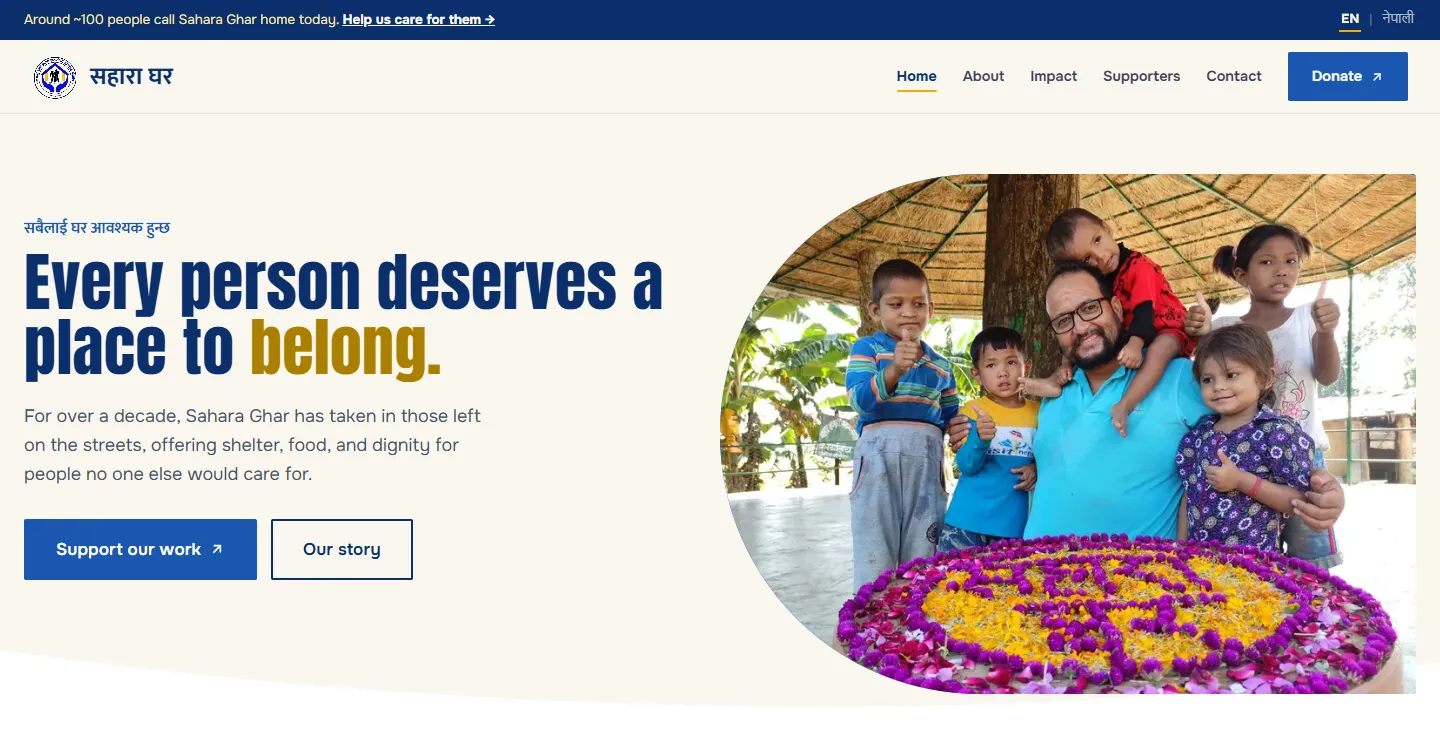
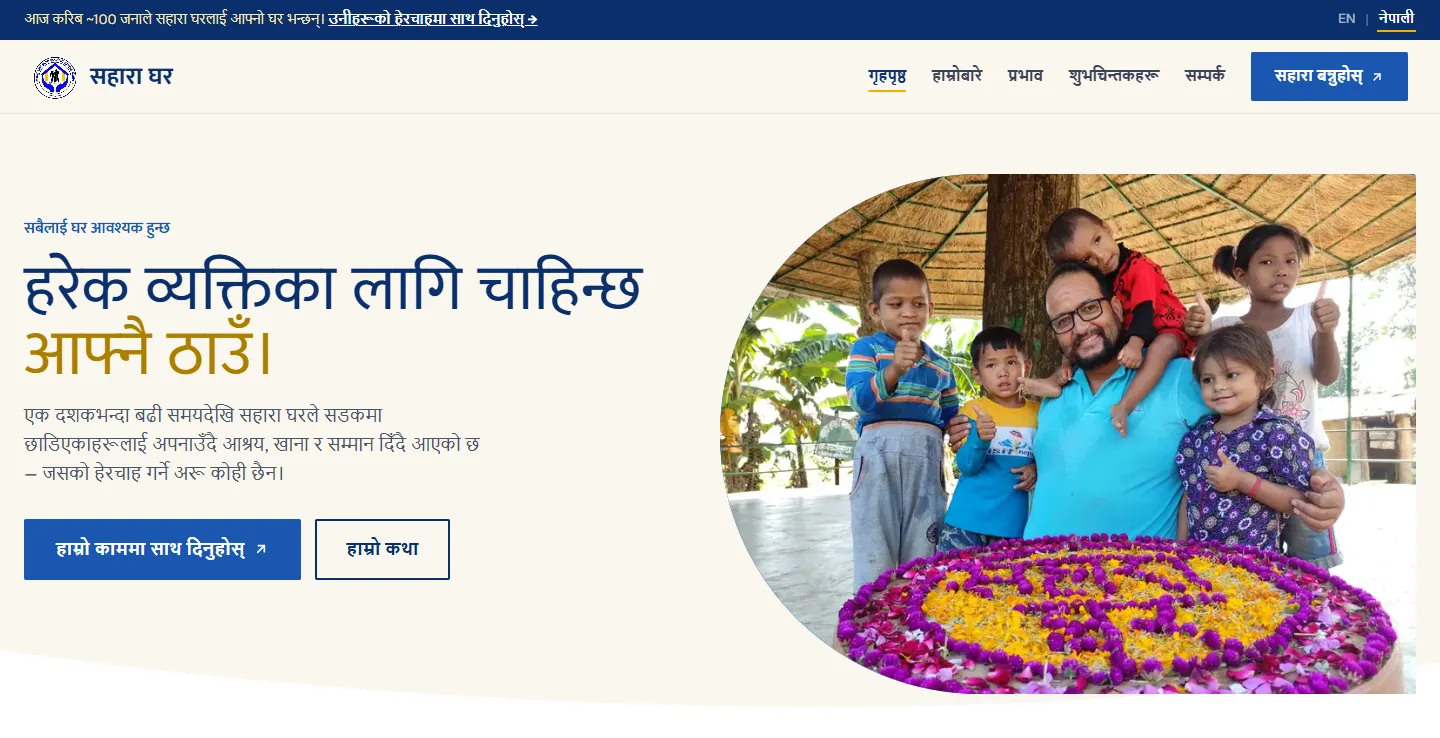
Five pages, one question each
Home: who they are. About: is this real. Impact: what happens here. Supporters: who else backs it. Contact: reach a person. And Donate, the ask.
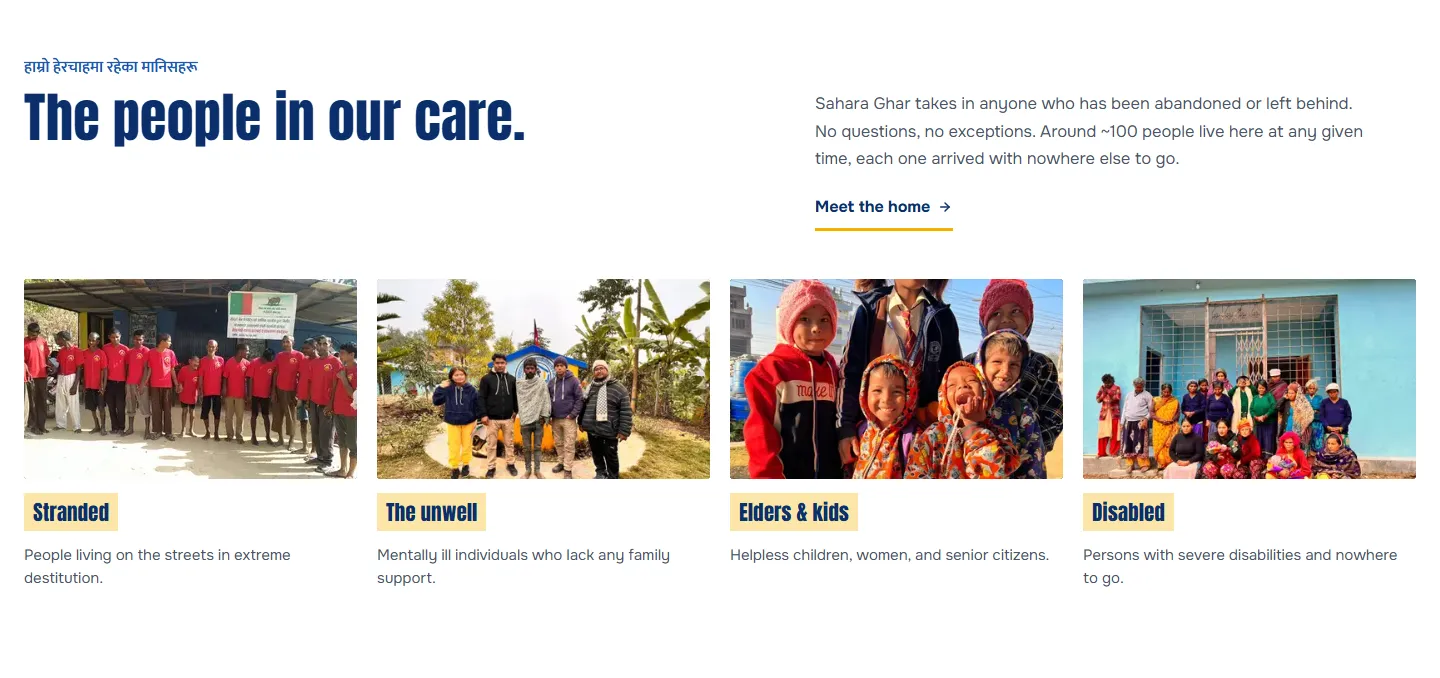
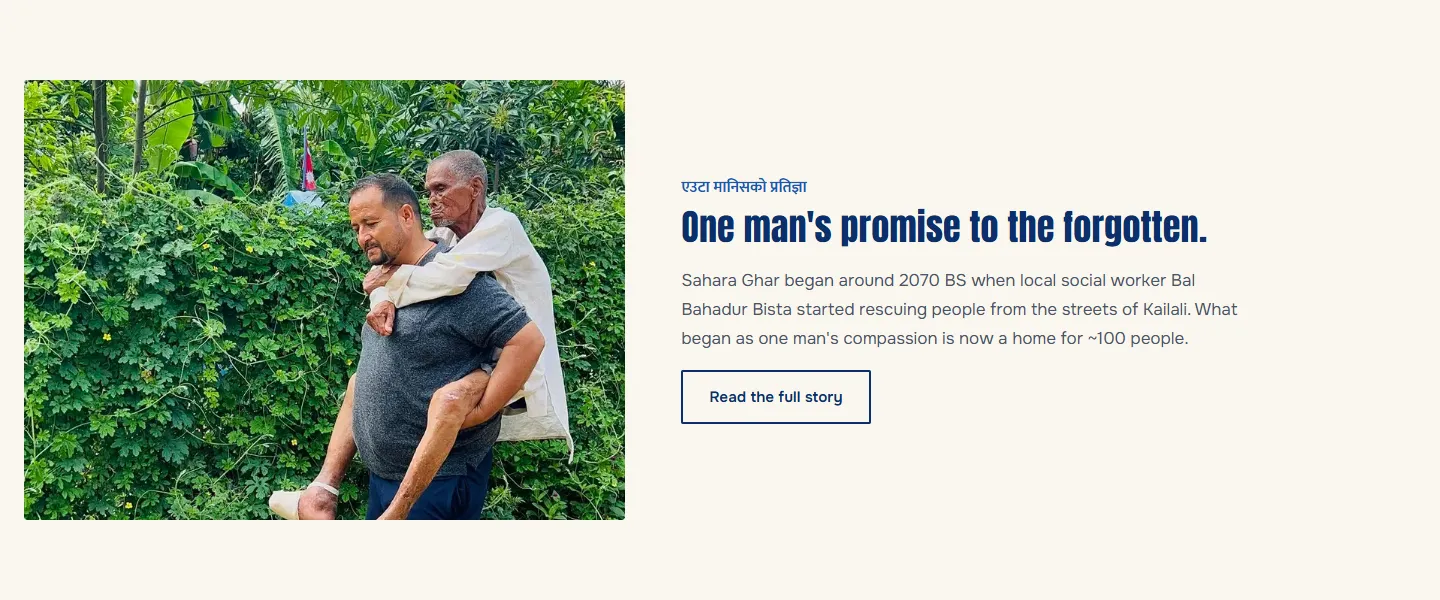
Marigold and civic blue
Both colours were already in the home’s own photographs. Anton for headlines, Onest for text, Mukta for Nepali.
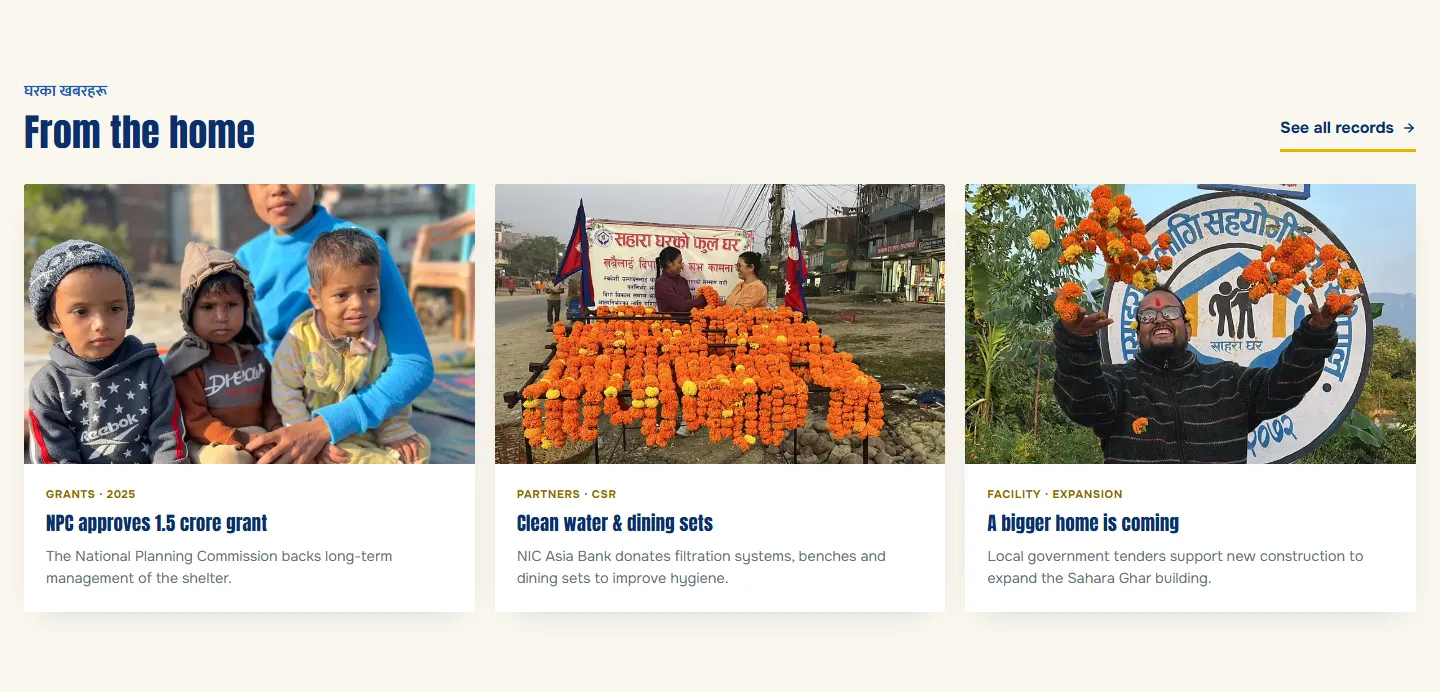
What review on a phone caught
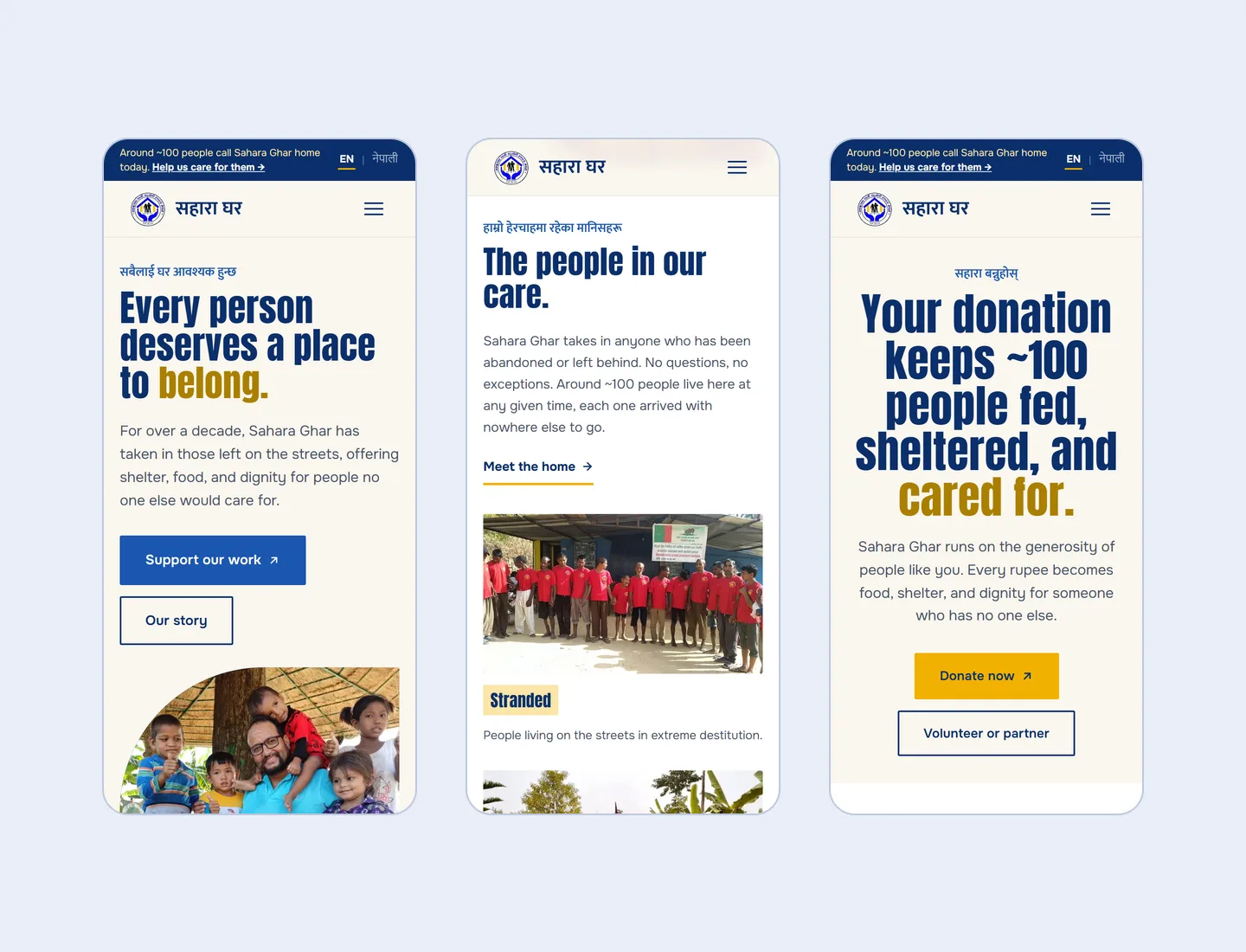
- Cards cropped everyone’s face off
- A quarter of the screen was empty
- Too much scrolling went to decoration
- The Facebook feed looked cut off
- You couldn’t tell which page you were on
The outcome
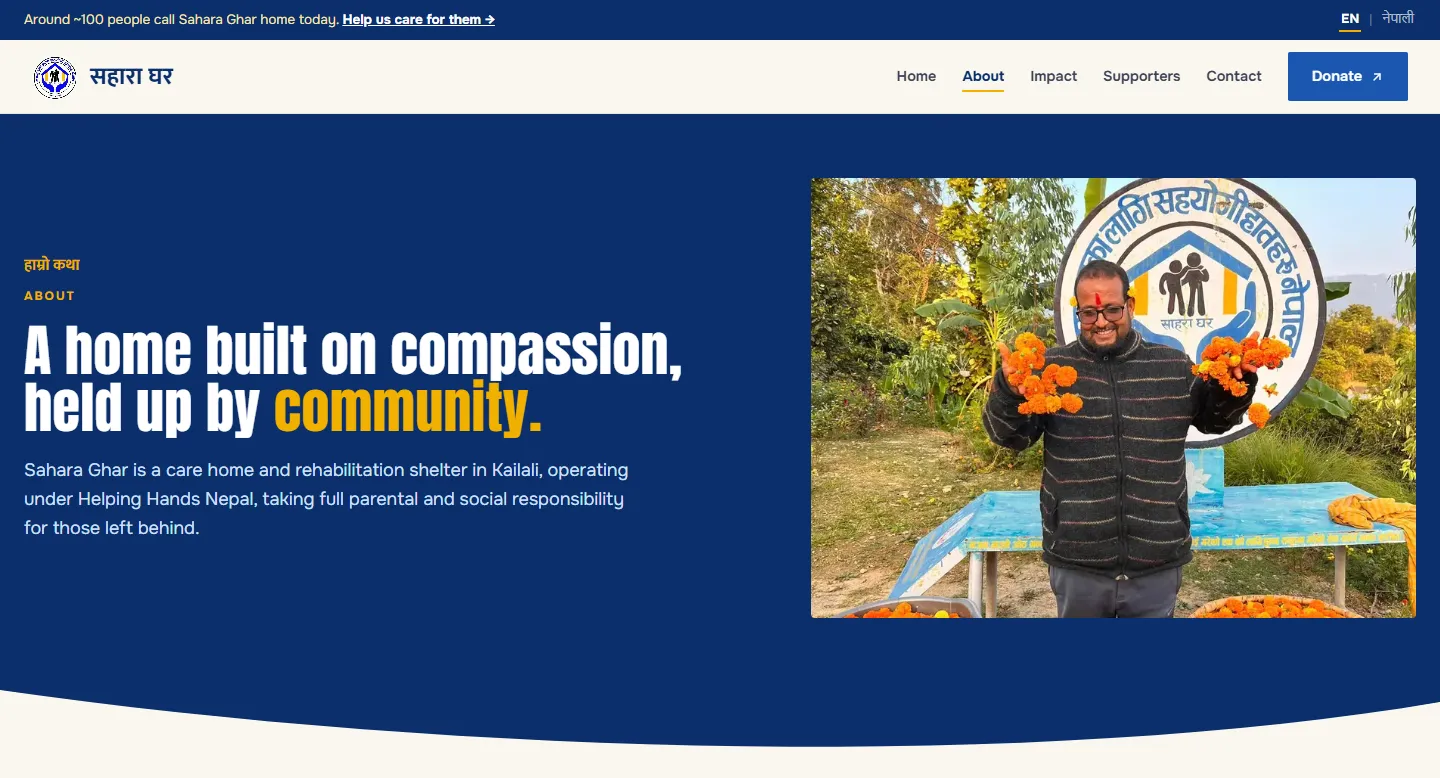
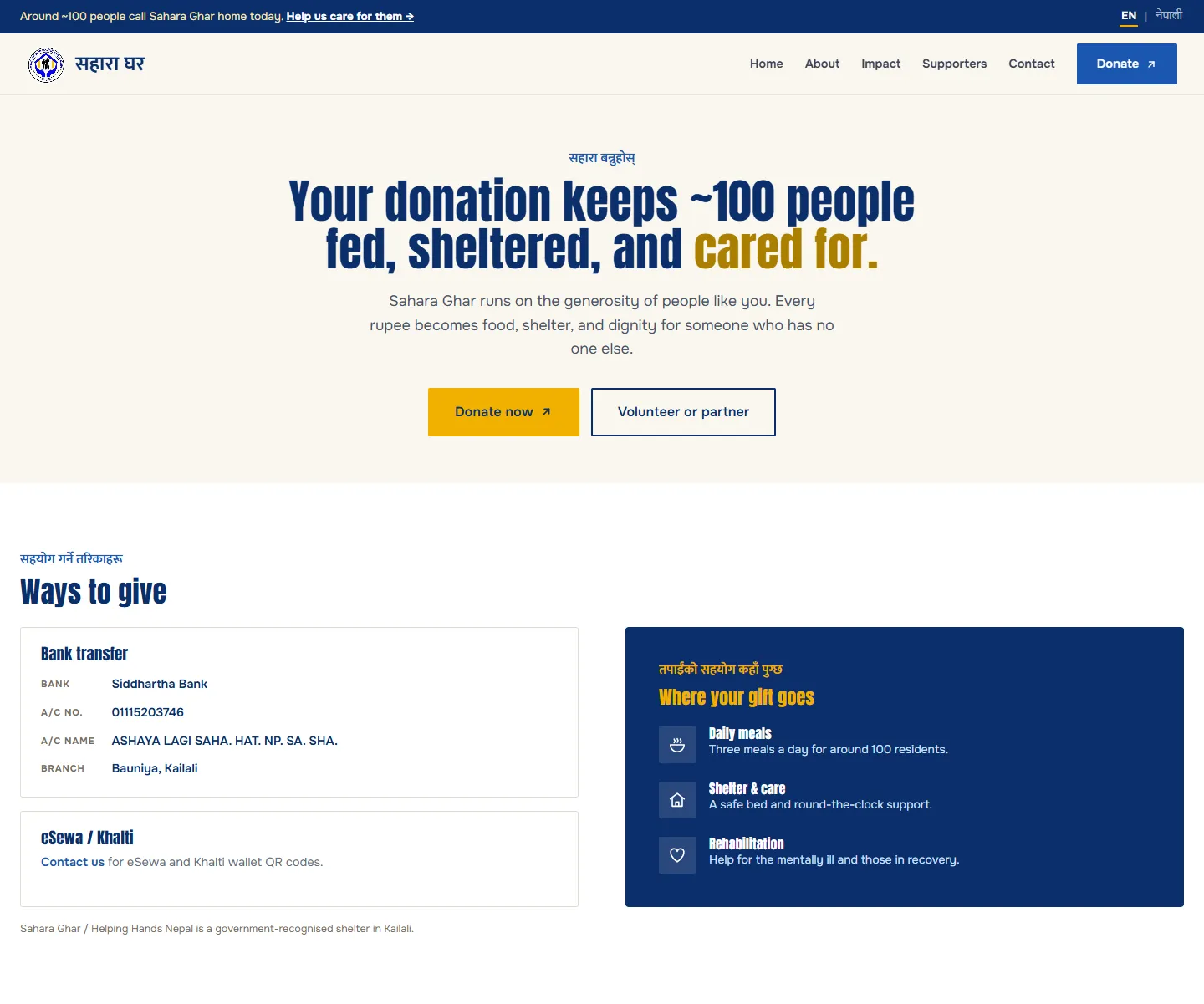
A permanent address for a decade of work, in both languages, that anyone can link to and check.
Next project
Ahskid Portfolio
A portfolio for a makeup artist and creative director in Lisbon, made of red paperclips, paper prints and a signature.